The Fine Print Behind an ‘All-Inclusive’ AI Ads Price
A line-by-line teardown of a typical AI ads pricing card, from account limits and generation caps to spend tiers, setup work, and the human cost of acting on alerts.
September 25, 2026
•
min read



You spend $20,000 a month on Google Ads, pay an agency another $4,000, and see no improvement in customer acquisition cost for six months. Do you keep the humans or switch campaign execution to autonomous AI? Smart operators disagree because an agency can bring commercial judgment a bidding system lacks, while a machine can do routine account work continuously instead of waiting for someone to open a dashboard on Tuesday.
After six months, you have paid $24,000 in management fees. Perhaps you have received useful strategic advice alongside the flat conversion charts. Perhaps you have received the same weekly deck with a new date on the cover. Those are different situations, and the distinction matters more than anyone's opinion about AI.
I spent nearly a decade managing Google Ads by hand, including late nights clearing junk queries. I know why good human account managers earn their keep. I also know how much mechanical work gets dressed up as strategy. Here is the best argument each side can make before I call it: spend size matters, but the work your account demands matters more.
The strongest case for your agency starts outside Google's dashboard. Ad platforms optimize for the conversion signals you give them. They do not inherently know whether the sale behind a healthy-looking ROAS figure has a healthy margin.
Say a wholesale buyer purchases 400 sample units of a zero-margin introductory product. An automated system sees sales. A competent strategist asks why that SKU is suddenly moving, checks whether fulfillment can handle it, and decides whether to deprioritize the product or exclude the relevant query. Someone who understands your business can weigh gross margins, supplier lead times, seasonal inventory and cash flow before treating a conversion as a win.
The same judgment matters when the auction changes. If a well-funded competitor starts bidding aggressively on your head terms, a seasoned media buyer can recommend a tactical retreat or shift spend toward long-tail variants rather than fight for traffic at any price. That is not a bid adjustment. It is a commercial decision about where your working capital has a chance to earn a return.
Human teams can also spot problems that bidding systems may mistake for campaign problems. If your lead form conversion rate drops 40% on a Wednesday, the cause might be a broken checkout script, a payment issue or a sales team that has stopped responding promptly to demo requests. An automated system reacting only to the conversion rate may pull back bids. A sharp account manager looks beyond the ad console, checks what changed upstream and helps coordinate a fix. The agency earns its fee when it diagnoses the business, not just the bid.
There is also a practical case for a named professional. When revenue misses forecast during a product rollout, an executive needs someone who can explain the campaign decisions, challenge the assumptions behind them and say what happens next. You cannot bring a bidding script into a board meeting to defend the growth plan.
A good agency gives the business a clear line of responsibility. It shields your team from daily auction noise, translates platform changes for the CFO and owns the paid-growth strategy. If your organization needs frequent creative coordination, approvals and commercial discussion, that work does not disappear because campaign execution gets faster. Accountability is valuable when the person accountable can actually change the plan.

Now make the strongest case against the agency. On $20,000 in monthly ad spend, a $4,000 management fee equals 20% of the media budget. Under a percentage-of-spend arrangement, the agency's fee rises when you spend more, even if the extra spend does not produce qualified pipeline. If pruning broad-match keywords could cut $5,000 in waste without losing conversions, that pricing model gives the agency no financial reason to welcome a smaller budget. That is the problem with agency retainer pricing tied to spend.
A flat retainer removes that particular incentive, but it does not guarantee attention. In a mid-sized agency, a specialist might manage 10 to 15 accounts. Subtract standups, client calls, email and slide-deck production, and your account may get only four to eight hours of direct campaign work a month. Against a $4,000 fee, that is $500 to $1,000 per hour of hands-on account time. If those hours go to routine search-term reviews, minor bid adjustments and a few ad-copy variations, you are paying management-consulting rates for maintenance.
An agency can justify the fee with judgment, creative direction and responsibility. It has a much harder time justifying it with a list of changes that a system could have made between meetings. Ask what the retainer bought before asking whether it was expensive.
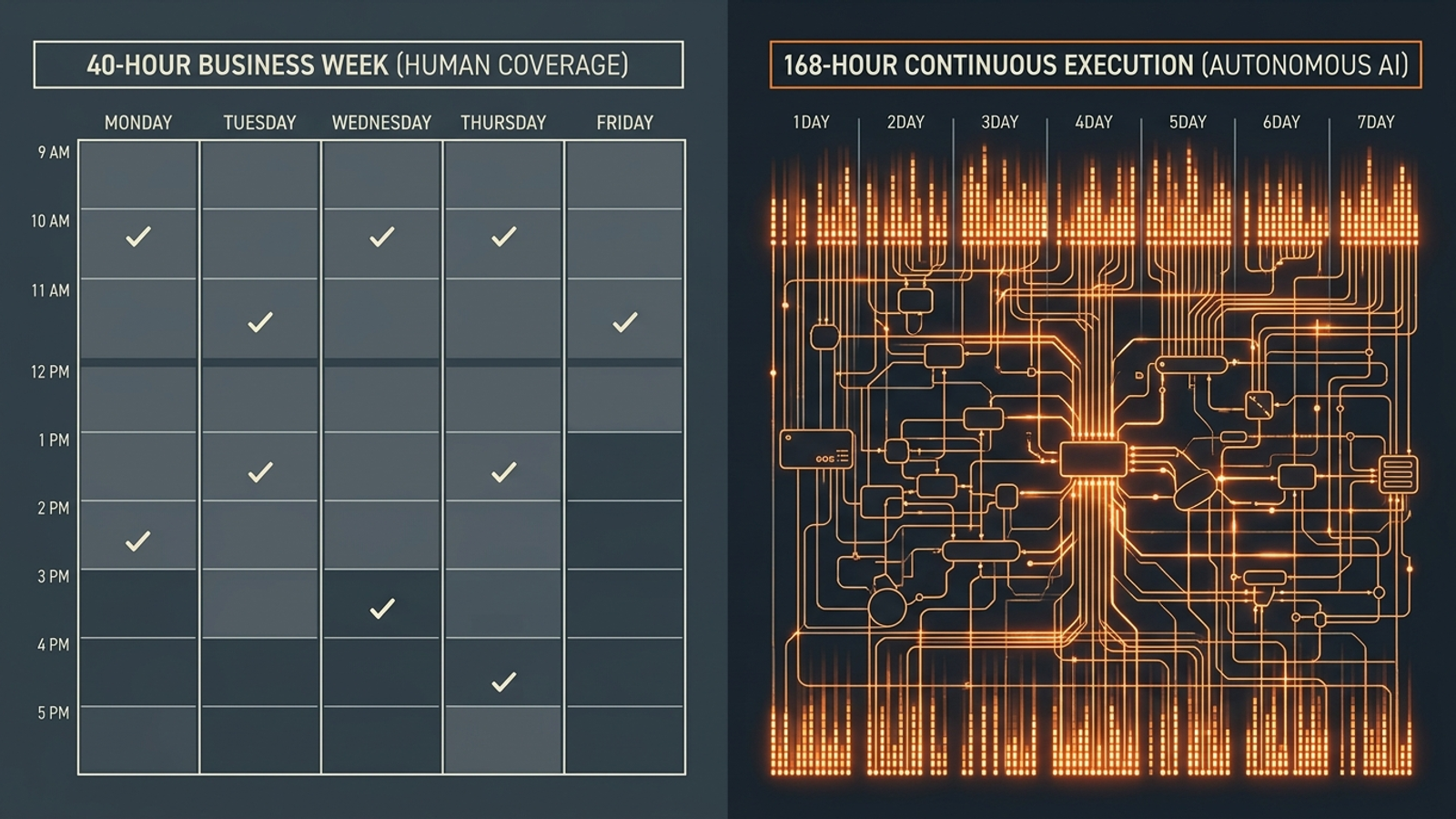
Ad auctions do not close at 5:00 PM. Competitors can change bids on a Friday evening; demand can shift over a weekend; irrelevant queries can consume budget while the account manager is away. A person reviewing search terms twice a week may eventually catch the waste. An autonomous system can monitor available signals continuously and act within its guardrails without waiting for the next scheduled account review. The advantage is not mystical intelligence. It is less time between a signal and a decision.
That does not mean asking one general-purpose chatbot to write headlines and run the account. In an architecture like groas, specialized models handle separate jobs: bid adjustments, search-intent classification, budget distribution and landing-page adaptation. Actions are logged with plain-language reasoning and constrained by client-defined financial guardrails. A human strategist still sets direction and remains accountable for the commercial objective.
A media buyer has limited hours in the account. Autonomous execution can evaluate thousands of data points every hour. When the account has enough activity and its conversion data reflects actual business value, that difference in operating speed can expose waste sooner than a month-end report. It also frees the strategist to work on the decisions the system cannot settle from auction data alone.
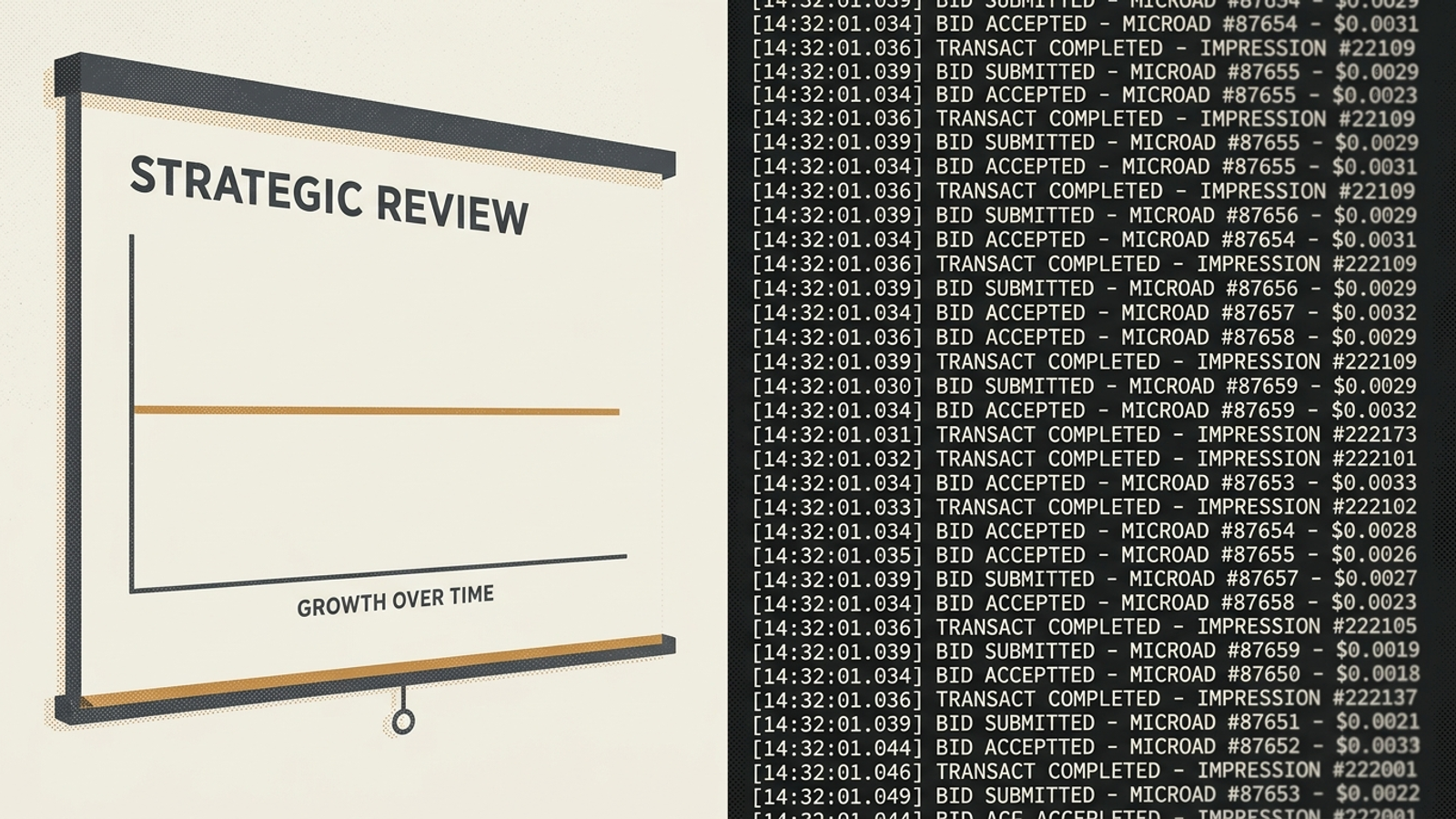
The agency case weakens when every maintenance task gets presented as strategic craft. Changing a target ROAS setting, adding ten negative keywords and writing three responsive search ad headlines can require care. They are not, by themselves, a month of high-level commercial thinking. If performance has been flat for six months, a polished account review is not proof that the team has found a new direction.
This is also where the accountability pitch deserves scrutiny. When you ask why customer acquisition cost has not moved, does your agency identify a decision it made, what it learned and what it will change? Or does it reach for market headwinds and another delay? The Google Ads learning phase can become an agency excuse when it substitutes for a performance discussion. A person who answers the phone but cannot account for the work is an expensive sounding board.
The AI case has its own fantasy: connect an API key, fire everyone and let the algorithm deposit profit into the operating account. No. An execution system does not inherently understand cash flow, sales-cycle length or whether a lead is a qualified buyer rather than a student downloading a free template. Give it corrupted conversion data and it can scale the wrong outcome quickly. Autonomy does not remove the need for judgment; it makes the quality of that judgment more consequential.
That is why the credible alternative to a weak agency is not an unattended tool. It is continuous execution paired with clean conversion tracking, commercial boundaries and an experienced strategist who can revise those boundaries when the business changes. Otherwise you have traded slow mistakes for fast ones.
If you have paid $4,000 a month through six months of flat performance, I would not renew on the strength of a relationship or a slide deck. Nor would I replace the agency just because the word autonomous sounds cheaper. The deciding question is how much of your fee buys commercial judgment and coordination, versus routine execution. Spend size helps answer it; account complexity can change the answer.

Those bands are not a magic switch. Between them, or within a band where the account behaves differently, inspect the work. A complicated approval process does not vanish at $75,000, and a straightforward account does not suddenly require weekly presentations at $150,000. Pay for the work your business needs, not the operating model the seller happens to offer.
Before switching, audit the data plumbing. If conversion tracking drifts, offline sales values do not feed back into Google Ads, or nobody can compare pipeline quality with ad spend, a new execution engine will inherit the same bad instructions. Businesses that bring management inside without the right foundations can run into the same problem; in-house Google Ads management needs structure. Fix what the system measures before asking it to move faster.
For the $20,000-a-month advertiser paying a $4,000 retainer and getting six months of flat performance, I would switch away from an agency that mainly sells campaign maintenance. I would keep the human strategist, insist on clear commercial guardrails and let autonomous execution handle the repetitive work. If the agency is instead doing the difficult creative, operational and organizational work your account genuinely requires, make it prove that value and keep it doing that work.
The verdict is not human versus machine. It is human judgment without a monthly surcharge for slow clerical work. If your agency cannot show growth work beyond what continuous execution can handle, cut the contract. Six months of flat performance is not a learning phase: it is time to ask what the invoice is actually paying for.