Your emergency plumbing page can have the right prices, response times and service areas and still miss the answer when someone asks an AI assistant who can fix a burst pipe tonight. If the assistant never retrieves your page, it cannot cite it. If it does retrieve the page but cannot find a passage that answers the question, the result may be the same.
That is the mechanism behind getting recommended. Not AEO magic. A live answer has to find sources, choose usable information from them and turn that information into a response. I used to tell clients AI visibility was mostly about authority and reviews. Those things can matter, but that explanation skips the part where a page either makes it into the assistant’s working set or does not. It also skips the less comfortable possibility: your page was there, and another page answered the question better.
Keep one example in view. Say you run an Austin plumbing shop. Your burst-pipe page lists prices, response times and service areas, but spreads them across several sections. A competitor has a longer blog and vaguer copy overall, yet puts a direct answer to the buyer’s question in one easy-to-use passage. Understanding why that passage might win tells you more than another list of supposed AI ranking tricks.
A live citation needs a source the assistant can use
When ChatGPT browses, or when Perplexity or Google AI Overviews draws on web results, the answer can follow a broad sequence: retrieve relevant pages, select useful material, synthesize a response and attach citations. The exact systems differ, but retrieval comes before citation. A page outside the retrieved set cannot supply the cited passage, however polished its copy is.
This distinction matters because not every answer opens the same door. ChatGPT can answer without browsing; in that case, rewriting your service page will not make it a live source for that particular response. A live-search answer does create an opportunity, but it does not promise your page a place in the result. The assistant still has to encounter it and find something worth using.
Suppose the buyer asks, “emergency plumber Austin burst pipe who shows up tonight.” The question contains more than a service category. It asks for a location, a problem and immediate availability. A general page about plumbing may relate to the topic while failing to answer that combination. A page about burst-pipe callouts in Austin has a clearer job.
The practical question is not “Is my site about plumbing?” It is “Can a search for this need find a page that answers this need?” That takes us to retrieval.
Retrieval: your page has to match the question being searched
An assistant may turn a long prompt into simpler searches. Our Austin request might lead to searches such as “emergency plumber Austin,” “burst pipe repair cost” and “24 hour plumber near me.” The candidate pages come from those searches, not from a single contest for the best plumbing website on the internet. A page can be useful to a human who has already found it and still be a poor match for the terms used to retrieve it.
That is why the wording and scope of a page matter. If your burst-pipe details live inside a broad services page, the relevant information may be hard to find among paragraphs about drain cleaning and installations. If the page clearly addresses burst-pipe calls in Austin, it has a more direct relationship to the prompt. This is not an invitation to repeat “emergency plumber Austin” until the copy sounds like a malfunctioning directory. It is a reason to make the page’s subject unmistakable.
The limit is important, too. You cannot know every search an assistant will make from a buyer’s question, and different assistants may take different routes. The example searches are a way to reason about likely matches, not a secret query list to paste into a heading. Ask what the buyer needs to know and whether one of your pages plainly covers it.
If you never appear among the sources for that need, fix discoverability before polishing a sentence for citation. But appearing is only the first hurdle. Once the assistant has a group of pages, it still has to find an answer inside one.
Synthesis: a source needs a passage that stands on its own
Retrieval gets your page in the room. Synthesis determines what, if anything, the answer takes from it. An assistant does not have to copy a sentence word for word to cite a page. It can combine and paraphrase information from sources. Still, a clear, self-contained passage gives it less to infer than a slogan or a detail scattered across the page.
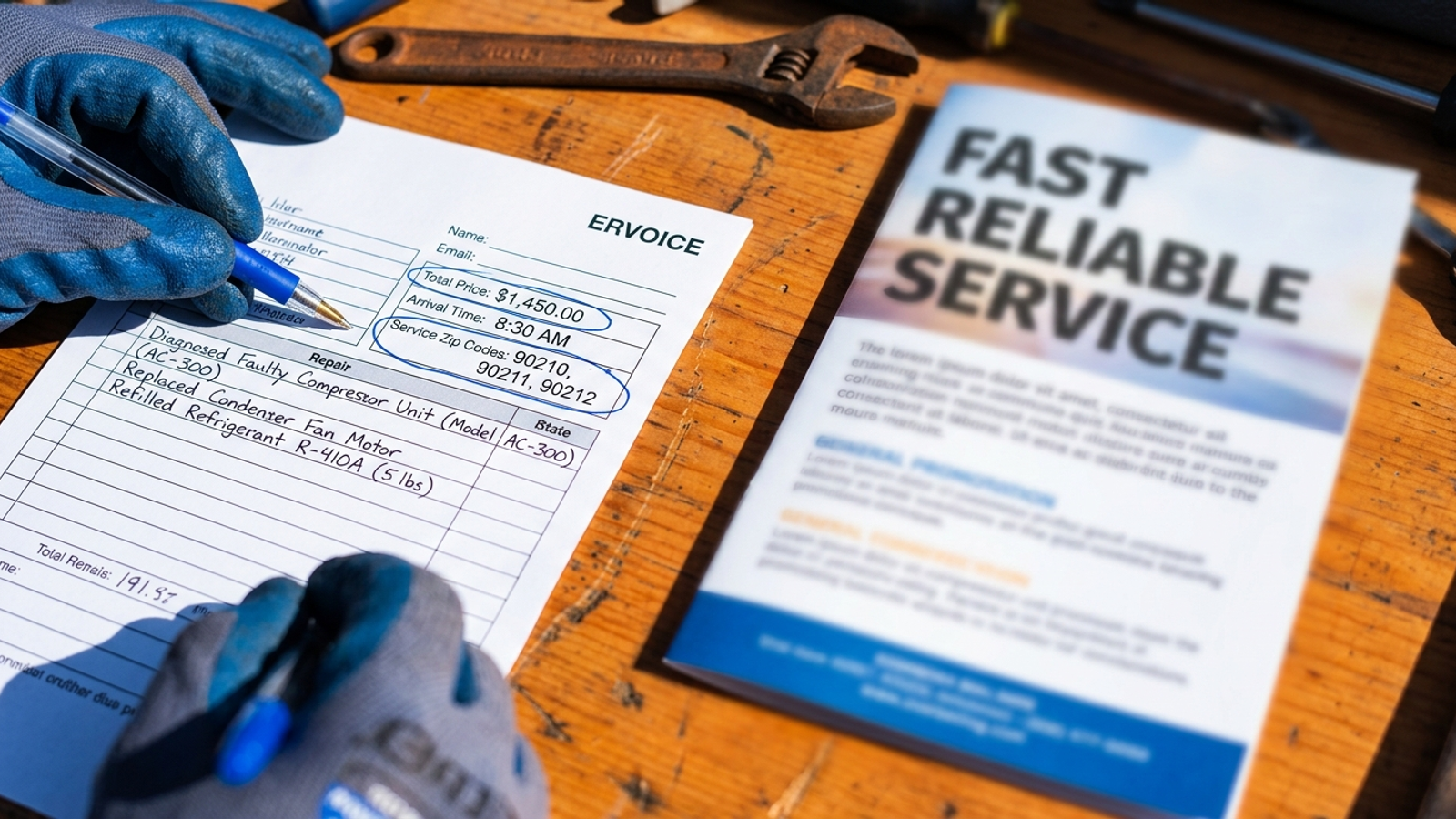
Back to the plumber. One page says, “Fast, reliable emergency service across the metro area.” The other says, as an illustrative example, “Burst-pipe callouts in Austin start at $149; average response is 45 minutes in 78704 and 78745; shutoff and cleanup are included.” The second passage answers price, speed, location and scope. The first asks a reader, or an assistant, to work out what “fast” means and whether the shop handles this particular problem tonight.
Those figures are examples, not a template for claims you cannot substantiate. If you do not offer a stated callout price or cannot support an average response time, do not invent either to make a page look quotable. State what you can say plainly. The mechanism rewards an answer, not a decorative number.
Now imagine your own page contains those same useful details, but the price appears near the top, the service area sits in a footer and the response time hides in a general FAQ. A buyer might assemble the answer with patience. A synthesis step has other candidate pages available. Putting related facts together makes your page easier to use without changing what you offer.
The test is simple: lift the passage away from its surrounding page. Would someone still know which service, place and conditions it describes? If the answer depends on three other sections, tighten the passage before you build another one.
The citation decision: make the useful answer easy to identify
A direct passage still needs a clear place on the page. A heading such as Burst-pipe callout cost in Austin, followed by a short answer and a table of services, tells a reader where to look. It also makes the relevant block easier to distinguish from navigation, testimonials and general sales copy. Structure serves the answer; it does not replace one.
Specificity matters for the same reason. A price, service area or response time can answer part of a buyer’s question when it is genuine and current. “Reliable service” cannot tell someone what a callout includes. A dated detail can also matter when the prompt asks about tonight, this week or a particular year. If the information changes, an old page may give a less useful answer than a page that says when its details were updated.
None of this means every cited page follows one layout or that a table guarantees a citation. It means the page should make its relevant claim clear, findable and current. For our plumber, that is more useful than adding another paragraph about a commitment to excellence. We have enough of those.
Why the same page can appear on one AI surface and miss another
The retrieval step is not identical everywhere. Google AI Overviews starts from Google’s search index, so being indexed and eligible for search matters before a page can appear as a source. Existing search visibility can give a page a head start in the candidate set. It does not guarantee that the page supplies the best passage for the overview. Being found and being useful to the answer are separate tests.
ChatGPT depends on whether it browses for the question. If it answers without a live fetch, your newly published burst-pipe page cannot become a live citation in that answer. Perplexity commonly builds answers around retrieved sources, which gives you another place to check whether the page is found and how it is used. The same page can therefore get a different result across surfaces without anything on the page changing.
For the Austin shop, this means a single citation check tells you less than it seems to. A miss in an answer that did not browse is not evidence that your opening sentence failed. A miss in a live answer that cites competing local pages is more interesting: did your page get found, and did it contain a comparable answer? Diagnose the stage before prescribing the fix.
If your immediate concern is Google, the passage-level question is worth examining through how citations work in Google AI Overviews. For this model, keep the distinction simple: first ask whether the surface had access to your page; then ask whether it had a reason to use it.
A useful page answers one real question in one place
Set aside citation for a moment and look at the page as a buyer would. Someone with water coming through the ceiling does not want to assemble a callout price from a service page, an old blog post and a vague promise about quick response. They want to know whether you handle burst pipes in their area, what a callout includes and how to reach you. The passage an assistant can use is often the passage a hurried human needed anyway.
This is where narrow pages can earn their place. A page devoted to a specific question has room to answer that question directly, then explain the conditions behind the answer. A broad page covering five services may be necessary for other reasons, but it can leave each question half-answered. The choice is not “short content beats long content.” It is “put the answer where a reader can find and understand it.” A long page can do that. A short page can fail at it.

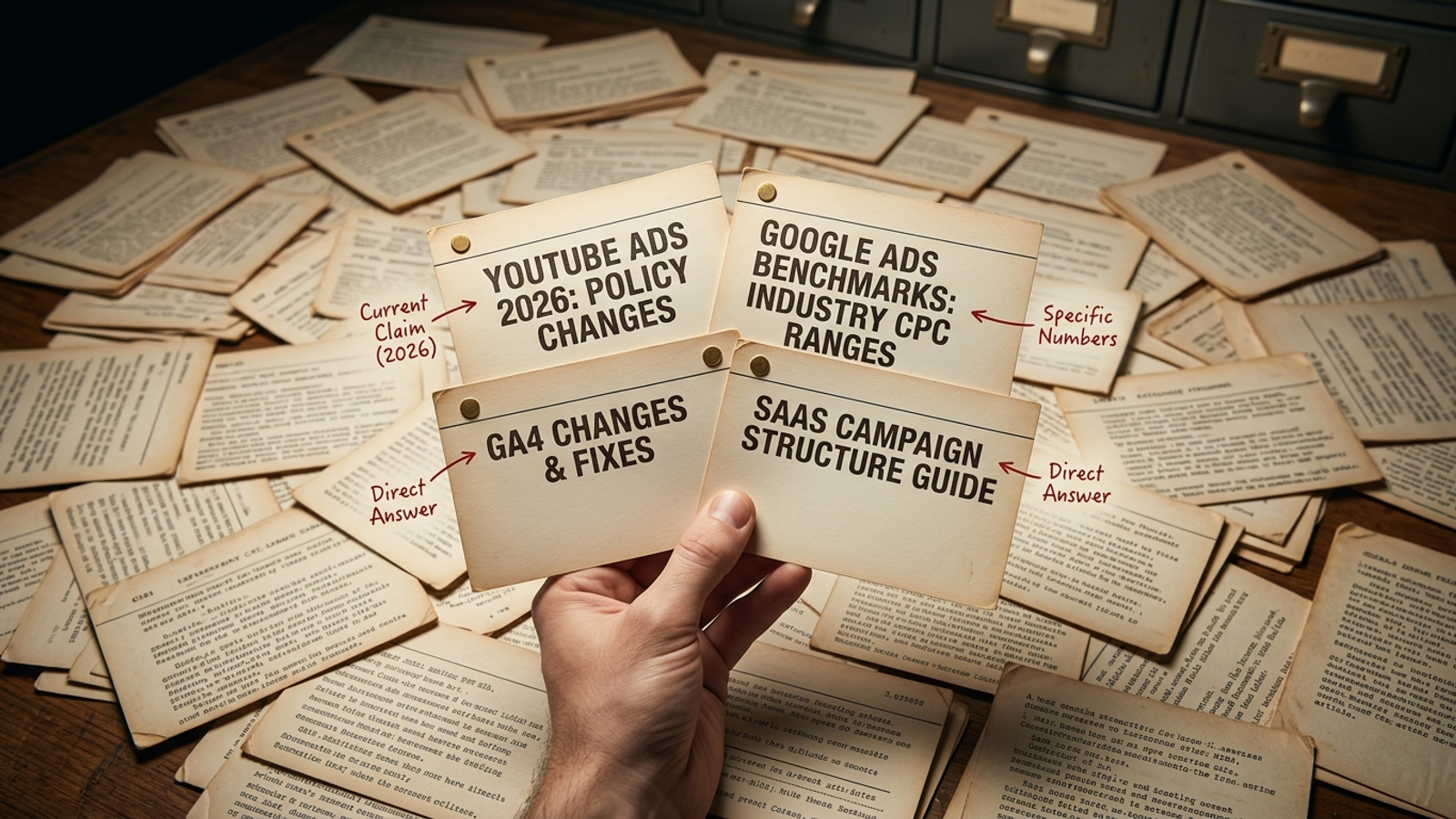
The index-card image is a useful analogy up to a point: the assistant needs to find a relevant piece of information among many. The analogy breaks if it suggests there is one exact card, one fixed set of searches or a sentence copied mechanically into every answer. Retrieval and synthesis can vary. Your part is to make the information available and legible when your page is encountered.
That is also why adding a date or a table without checking the underlying answer is busywork. If the buyer asks about burst-pipe cost and your page never states a cost you can stand behind, formatting will not supply it. First decide what you can answer. Then give that answer a clear home.
Diagnose the miss before you rewrite the site
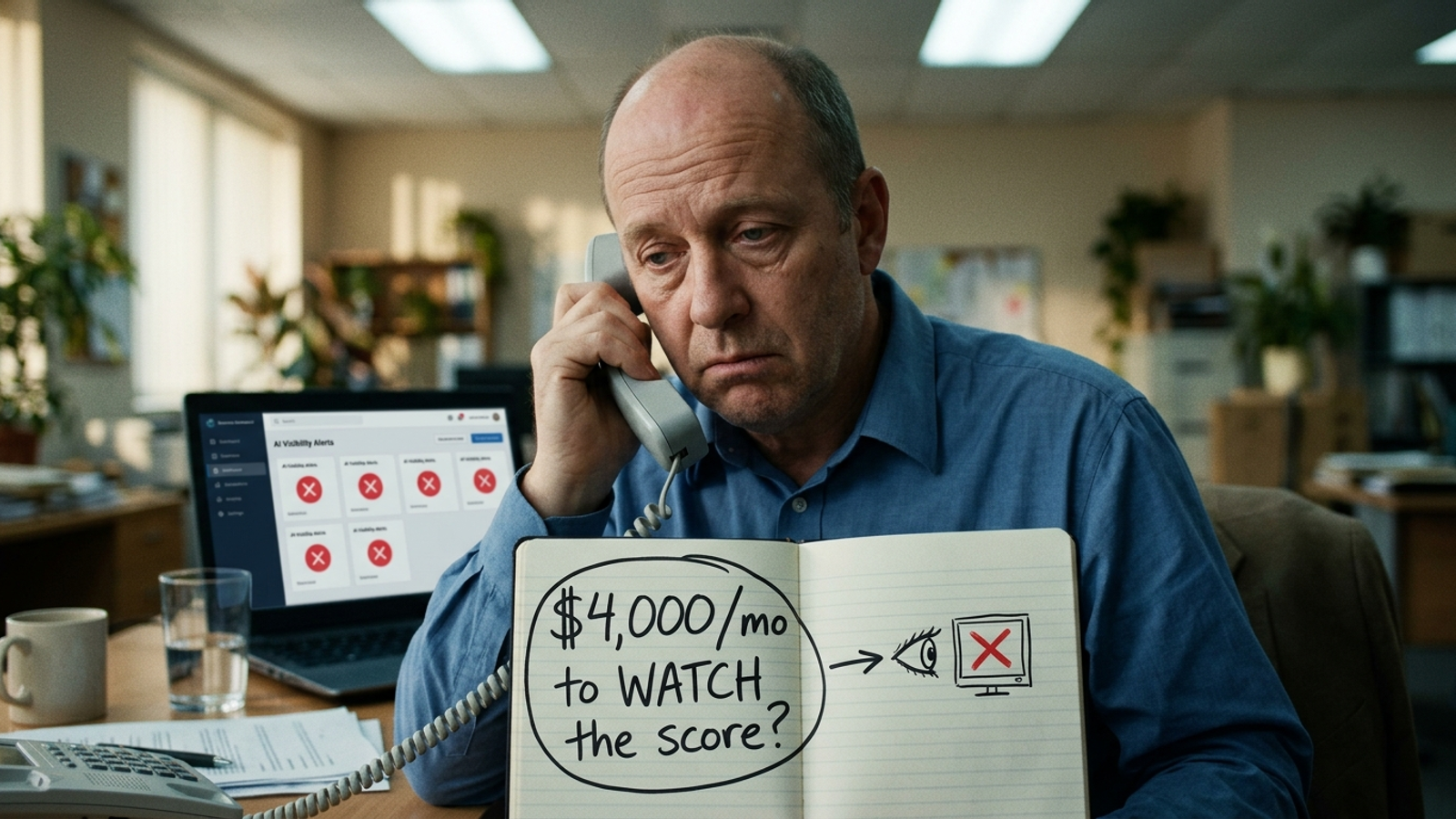
Run the plumber test on your own pages before commissioning a content plan. Pick five prompts buyers actually ask. Check them in Perplexity and, where a Google AI Overview appears, in Google. Note the pages cited and the information each answer takes from them. Repeat the check rather than treating one response as a permanent ranking. Start with the prompt and the answer, not a dashboard score.
As you review each prompt, separate two problems:
- Retrieval: You cannot find your page among the relevant sources. Check whether a page clearly covers that buyer need and whether it can be found and read. For Google AI Overviews, ordinary search visibility and indexing are part of this question. Rewriting a hidden paragraph into a perfect answer will not help if the page is never encountered.
- Synthesis: Your page is encountered, but the answer uses another source. Read both passages. Does yours state the relevant service, conditions and details together? Are numbers consistent across your pages? Is the answer trapped in an image while the surrounding text says little? Fix the passage the assistant would need to use.
You may not get a complete list of everything an assistant retrieved, so do not mistake an uncited page for proof that it was never fetched. Use what you can observe: the prompt, the surfaced sources, the resulting answer and whether your own page supplies the missing information. That is enough to choose a sensible next edit without pretending you can see inside every step.
For our plumber, the sequence could be straightforward. If no relevant burst-pipe page appears, make sure there is a findable page devoted to the service and area. If that page appears but the cited competitor supplies a clearer account of price and response time, put your own supported details together near the top. If the offer changes, update the page rather than leaving conflicting promises around the site. Fix access first, then the answer.
This is where brand visibility across ChatGPT, Gemini and Google AI Overviews can be more useful than watching positions alone: you want to know how your business appears in the answers buyers see. A rank does not tell you which passage an answer found useful. Nor does a citation, by itself, prove a sale. Keep the measurement tied to the prompt you are trying to answer.
When you write, resist turning “one prompt, one page” into a quota. Closely related questions may belong together if one page answers each cleanly. The point is not to publish five thin variations of the same promise. It is to stop making one generic page do the work of five distinct answers. Write the passages you wish a buyer could find, use claims you can support, publish them where they fit, then check the same prompts again.
Apply the model to a page that is not about plumbers
Say you sell scheduling software for dental clinics and want to appear for “best recall software for small dental practice.” Start with retrieval. That prompt could lead an assistant toward “dental recall software,” “patient recall automation cost” and “small practice scheduling.” A page headed only Our platform gives little indication that it addresses those needs. A page that plainly discusses recall for small practices has a clearer route into the candidate set.
Now apply synthesis. The buyer needs to understand who the software fits, what it costs, what it replaces and what setup involves. If you can state a price per location, a supported recall-lift figure and setup time in days, put them together in a short opening answer. A table comparing manual recall with automated recall could then explain the difference. If you cannot substantiate a figure, leave it out and answer with the details you do have. Making a claim easy to cite is not permission to make it up.
Finally, consider the citation. A longer competitor guide might cover dental marketing in general but never answer the small-practice recall question directly. Your focused passage gives the assistant something relevant to work with. It still may not retrieve your page or choose it as a source; the model predicts where to improve your chances, not a guaranteed result.
That is the method I would use before writing another page: work from the buyer’s question to retrieval, then from the retrieved page to a usable answer. Check what appears, write what is missing, and check again. If your offer changes every quarter or your own pages contradict one another, fix that first. Otherwise, the Austin plumber and the dental software page face the same test: can an assistant find the page, and does the page answer the question it came for?