Five Google Ads Predictions to Test by the End of 2027
Five dated calls on Search structure, learning phases, setup advice, YouTube frequency and agency fees, with a test for each one.
September 26, 2026
•
min read



Friday night: a SaaS startup replaces its trial page while its search ads keep promising the old trial. By Monday, the account manager is staring at a page he has never seen. What follows is a composite of landing-page surprises I have watched in accounts, not a transcript of one client weekend.
In this version, I am proud of the account. Which tells you exactly how this ends.
The startup changes its offer every quarter and calls it iteration. I have spent a month building the search structure by hand: tight ad groups, three match types split out the way we did it then, a negative keyword list mined at 1am from the search terms report. The ad copy matches the landing-page headline almost word for word. Quality Scores have climbed into the 8s and 9s where they matter. CPA has come down week after week to a number I can put in a client email without flinching.
Then someone with site access and a deadline swaps the page. They do not change an ad, a keyword or a bid. They do not tell me.
I open the account and something feels off before the numbers tell me why. Impression share is fine. Spend is pacing. Click-through has softened on the two ad groups that carry most of the pipeline, and average CPC is up a few cents. A few cents looks like noise until you remember what it took to earn those positions.
I check change history first, out of habit. Nothing from me. Then I open the landing page from the ad preview and do not recognize it. New headline. New subhead. The trial button I matched to the ad copy is gone, replaced by a demo form behind three new fields. The offer has changed again. Every ad still points to the right URL; the problem is that the URL now makes a different promise.
That distinction matters when you are trying to find the break. The account history can tell me who touched a bid. It cannot show a page rewrite that happened outside Google Ads. My alerts inside the account are quiet, and the ads keep sending people through. The account is running as built, but the thing it was built around has moved.
No one tells me about the swap until Tuesday.
By Thursday, the damage is legible. Keywords that sat at 9s are showing 6s and 5s. Landing page experience, previously above average across the core terms, has slipped to average and then below average on the exact match terms I care about most. Expected click-through follows it down. A new page is not a penalty in itself. Here, the ad offers a trial and the page asks for a demo. That mismatch makes the click less useful to the visitor, while the longer form gives fewer of those visitors a reason to finish.
CPCs climb 20 to 30 percent on the same queries. Conversion rate falls. Put those together and CPA nearly doubles in four days. Say you are spending $20k a month. That is not a rounding error. It is budget paying for clicks that used to convert and now do not. The page may look better to someone who already knows the product. The search visitor has arrived expecting something else.
I call the founder. I rewrite the top six ads to match the new headline rather than keep advertising a trial the page no longer offers. I pull exact match bids down about 15 percent to stop paying last week’s prices for this week’s page. Then I rebuild the ad groups around the new offer, the new demo language and the new form. It is competent work. It is also four days late.

What stays with me is the gap between Friday night and Tuesday morning. Friday’s change keeps buying clicks through the weekend and into Monday on a page I have never seen. My Monday check is the first human look at the problem. By then, the account is already paying for the mismatch. The founder’s Tuesday message explains what changed, but it cannot give that spend back.
I used to tell clients I checked accounts daily, and I did. Daily sounds like vigilance until you measure it against an auction that keeps running through the hours I am not at my desk. It also leaves a fairly large hole called the weekend. The startup has done the normal startup thing: ship on Friday, tell marketing on Tuesday. My operating model has no answer for it.
An account check can be thorough and still miss the point. I can inspect search terms, bids, spend and conversion columns without seeing the words a visitor sees after the click. In this case, opening the page exposes the problem faster than another pass through change history. The mistake is not that I failed to work hard enough on Monday. It is that nothing connected the page change to the account before Monday arrived.
The rebuild takes the rest of that week. I will spare you the full search-terms-export montage. I pause the two ad groups bleeding hardest, put the demo-focused keywords in their own group so the form change does not muddy the trial terms, and add the branded misspellings created by the latest rebrand. Standard surgery. None of it is especially glamorous, which is usually how you know you are doing account work rather than preparing a slide about account work.
The part I underestimate is how long the account takes to settle after the surgery is done right. The new ads finally mirror the new page. The keywords are grouped around the offer people can actually get. But those changes do not restore the old conversion rate on command. The page asks visitors to do something different, and the bidding system needs fresh performance data to work with that behavior. The old build cannot simply be switched back on under a new headline.
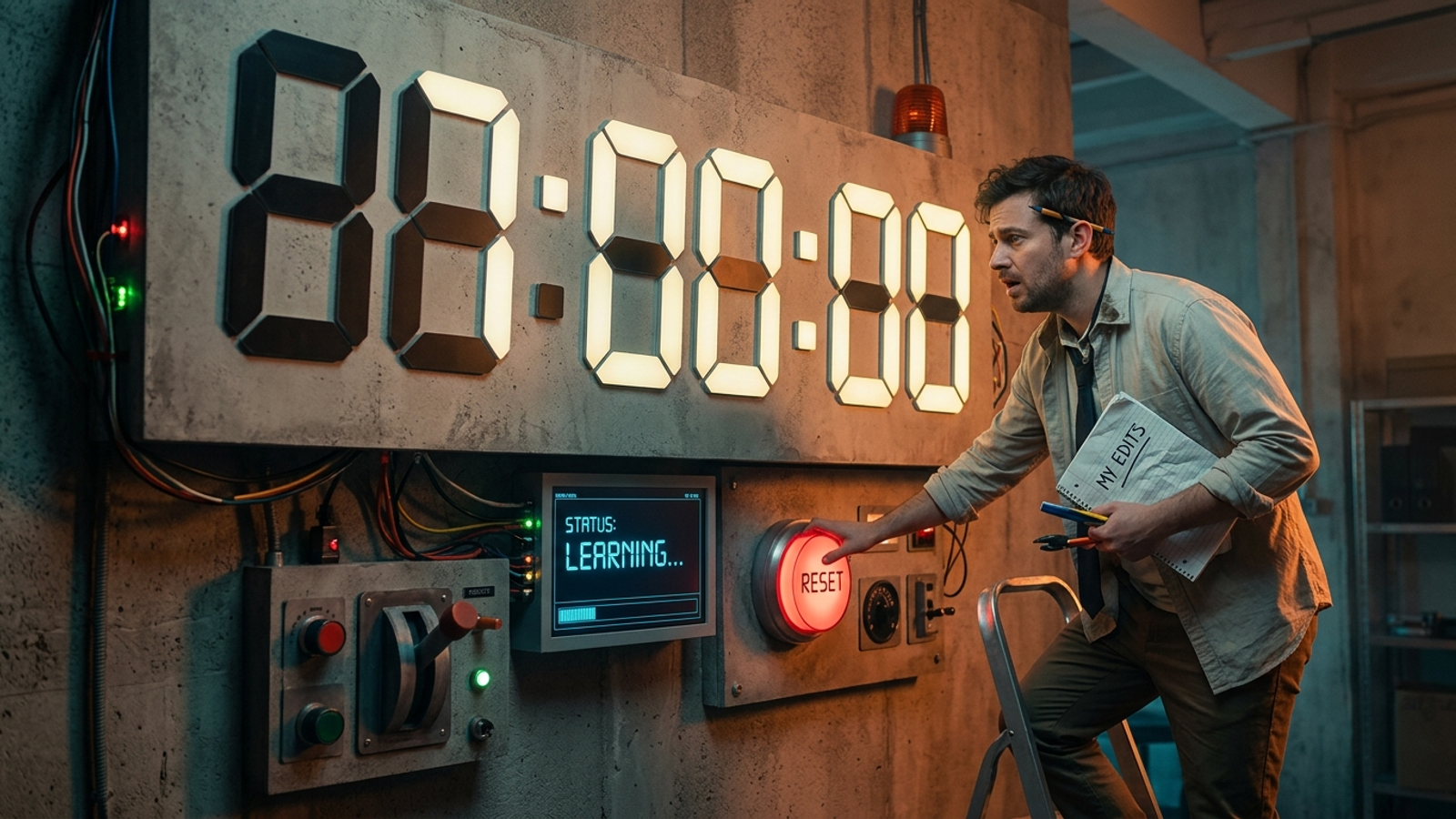
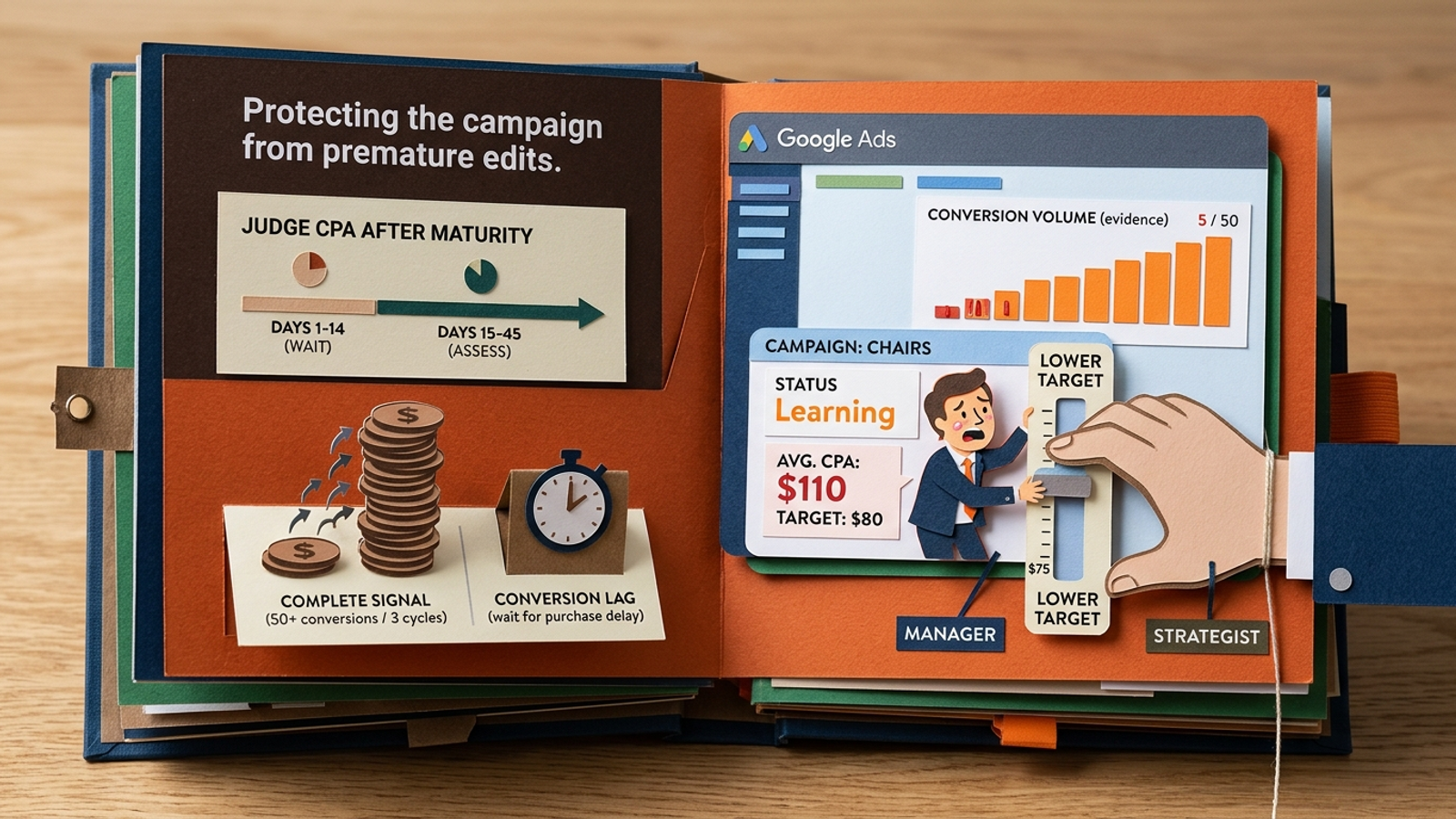
That is the plain-English version of the learning phase. After a significant change, automated bidding gathers performance data again; that period can run from one week to one month. We are living inside it. Each day supplies a little more information about who will complete the new form, and the account pays for the clicks that supply it. Fixing the mismatch stops one problem; it does not erase the cost of finding it late.
Week two looks like this on a screen. Monday: two conversions, both expensive. Tuesday: nothing until 4pm, then one demo that makes the CPA column look almost normal for about an hour. Wednesday: spend paces early, clicks come from broader variants I have already added as negatives once before, and I add them again. I can keep cleaning the account. I cannot make a new demo form behave like the old trial page, or ask bidding to know the new baseline before the data arrives.
That is the frustrating part of a clean repair: the account can make sense again before the economics do. The ads stop promising a trial, but the new form still has to earn its place with the traffic arriving from search. Looking at a tidy structure does not settle the question the founder cares about. He wants to know what a demo costs now, not whether I have finished rearranging the ad groups.
By the end of week three, the numbers start to look less foreign. Quality Scores tick from 5s back to 7s on the core terms as the ads and page work together again. Quality Score gives me a way to see that recovery in the account; CPA is the number the client feels. It comes down slowly, like a fever breaking. In this version of the account, it takes almost a full month to get back to the CPA I was proud of before Friday night. A month of recovery follows a change I could not see when it happened.
On the call, the founder apologizes. The product team shipped Friday because the sprint ended Friday; he thought marketing would like the new page better. He is right that it looks better. It converts worse for this search traffic because it speaks to people who already know the product, not people typing a problem into Google for the first time. I explain the difference between those visitors. Then I hear myself give the old instruction: please warn me before you change the site.
I used to think that was a reasonable safeguard. It is a request, not a system. Busy people forget to send the warning, especially when they think they are improving the page. If my plan depends on someone outside the account remembering to tell me before a Friday deploy, I have built the delay into the plan. The founder should have told me. I should not have needed his message to learn the page had changed.
Here is the part that stays with me longer than the CPA chart. I bill that client a percentage of spend, the way almost everyone does in this version of the story. They spend more while performance gets worse, and I get paid to fix a problem I find four days late. What the deck calls account management, I call checking in on a schedule that suits the manager. Google’s auction does not pause for weekends. Client teams do not pause either. Under that arrangement, more spend can mean a bigger bill even during the days nobody catches the break.
I keep thinking about the month I spent building the structure. The negatives at 1am, the headline matching, the bid splits: all of it works until the page changes. I am not embarrassed by the build. A careful manager should do that work well. But the build is a photograph, and the account keeps moving after I take it. I can spend another month polishing the photograph. It will not tell me what the page says on Saturday morning.
I replay that weekend as a different scene. Friday night, the page content changes. The ads are still written for a trial; the site now asks for a demo. A system that notices that mismatch while it can still be acted on gives the person responsible for the account a chance to respond before Monday’s spend is gone. It does not need to predict the founder’s next sprint or make the new form convert. It needs to notice what my scheduled visit misses.

I work now with a different operating model. groas runs search work around the clock, with a human strategist responsible for direction and guardrails. That does not make a surprise page swap harmless, and I would not sell it that way. The value was never just in the manual build. It was in the continuous attention my scheduled checks could not provide.
In the Friday-night version of the scene, the old trial headline is still open in my tab. On the site, the button is gone.